
I was asked this week that given the political times, what do I say to people who are concerned about immigration and its impact on communities and social structures? The question was an allusion to an anti-immigrant sentiment that seems to be growing.
I suggested that:
- Canadians respect the 1985 decision of the Supreme Court of Canada that anyone and everyone on Canadian soil is covered by the Canadian Charter of Rights which is imbedded in the Constitution and emphatically protects all people.
- Canadians believe in due process and that people who truly need protection, should get access to a system that can give them that protection.
- Canadians don’t want to stop being who we are and that right now, in these times, we get to make a choice to uphold all that is good about being Canadian. This includes allowing the rigorous and highly successful refugee claim system that is the envy of the world, to determine who needs protection. It is doing the job we want it to do.
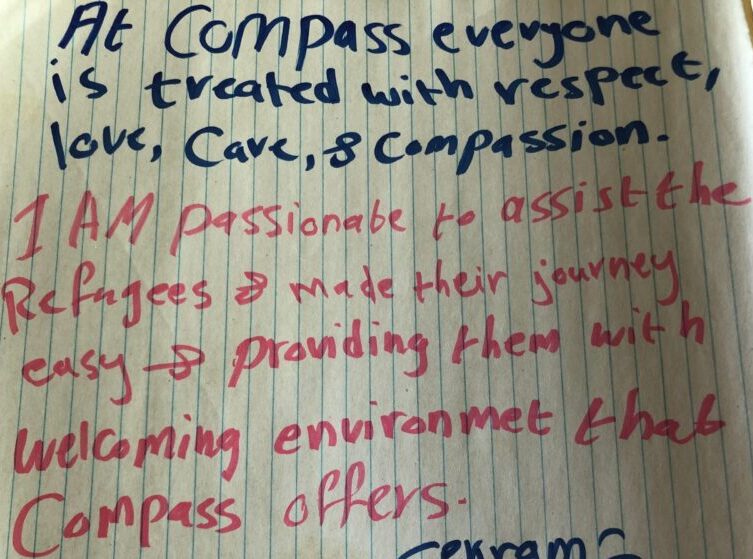
I want to add now that the end should not decide the experience along the way. In other words, we don’t treat people well only if they will be found to be “legit” or “legal”. We treat them well because in doing so we show who WE are. WE take the high road. WE give people the benefit of the doubt. WE treat others with respect, love, care and compassion, because that’s who WE are.
Why?
Because we believe:
- In fair and due process, even times are hard.
- In the right to be heard before being judged.
- When lives can be saved, we should save them.
- Borders are important, but they should not be weaponized against vulnerable people.
- In protecting livelihood, but not at the expense of people’s lives.
- When we have our priorities straight, no one needs to go without what all of us need.
It’s hard to think about what happens in other places. It feels so far removed from us, and yet when it is brought close, we can’t imagine it to be true. Some of it is just so awful. We don’t know what to do with it when it shows up in our day-to-day. This isn’t just about long foodbank lines, and substandard or unavailable housing, or stressed health care systems.
- It’s about the bananas we eat that were put in the box for shipping to us by a child who works dawn to dusk for a Canadian owned company, making only enough money to buy one meal.
- It’s about the phones we use that are made from parts mined and formed in an exploitative labour market.
- It’s about women being silenced at best, and at worst, treated as objects that exist only for another’s cruel pleasure.
- It’s about children sitting on the floor of the car on the way to school to avoid getting shot in the crossfire of unrelenting gangs and corrupt militias.
- It’s about policies designed to weaken, even bankrupt us, so someone else can take us over.
- It’s about policies that scoop up young and old and put them into detention, expose them to inhumane conditions, and force displacement or deportation because someone in power decided they can’t be one of us.
The challenge with people seeking refuge is that it forces us to think about these kinds of things and other causes behind the need for refuge: human trafficking, land expropriation, judicial injustice, economic greed, abuse of power, betrayal of allies, political persecution and “disappearing”, and so much more. These are harder to deal with, and we don’t like when it comes knocking at our door.
But refusing to answer the door or slamming the door shut, either in our attitudes or in our laws, doesn’t solve it. We have tried that in so many different ways over the last 100+ years. Canada’s first immigration policy in 1913 set the foundation. From there came the Chinese Head Tax, the identification of “enemy aliens”, deporting “ruined women” (those who had sex before marriage), exclusion of “any immigrant of Asiatic race” except for farm and domestic workers”, admittance of “preferred countries,” and deportations of those who organized or participated in organized labour. That was just the first twenty years.
But here we are now. One hundred and twenty-two years later still treating people like they are wrecking life for the rest of us. This risks showing we are no different than the culprits who forced them to our door in the first place.
Ultimately, it leaves us as slaves to our own fears. We then create an imaginary haven of safety inside a fishbowl of self-protection, guilty of enjoying our lives at the expense of others. The problem may not have started with us, but it does hold a mirror up to us.
In the midst of the struggle and the rhetoric, we get to decide who WE want to be! How do we want to answer when someone asks, “What do you say… ?”